STACK started in 1988 as an international (even world wide) group, to organize sport kite fliers and other sport kite "addicts". At that time STACK was based in England. After about 5 years it proved necessary to decentralise, and start to organise on a national level.
The STACK International Executive Committee is no longer based in England, its 6 members (included the International Head Judge) are now from 5 different countries. It has taken some time to formalise the structure of STACK, but most of it is now arranged.
The following description of the way STACK is organized is derived from the Charter! The scheme further down might make things clearer. Names and addresses can be found in the list of officials
The most essential part of STACK is the group of members.
Members are those who are member of a National organisation, which is approved by the STACK International Executive Committee (SIEC), and the International members
The members elect the 5 SIEC-members once every two years. They also elect a National Director (or if the National organisation is set up that way a national committee). These elections take place -preferably- in alternate years, in the one year SIEC, in the other the National director. So also the National Director is elected -at least- every two years. This way continuity is more or less secured, and information about STACK not lost. Next regular SIEC elections are due at the end of 1997/ beginning 1998.
The International Head Judge will select the National Head Judge, based on a list supplied by the National Director. The International Head Judge is appointed by SIEC a year after its election.
The main task of the International Head Judge is to assure the quality of judging throughout STACK, and bring or keep it on a high level. In order to do so she/he will keep a judges register, selects the National Head Judges, promotes judging courses
The National Head Judge will:
The National Head Judge will implement the STACK rules in each country, makes sure that judging is done on the highest possible level, gives judging courses, registers judges, selects judges for the national competitons, and together with the IHJ for international events in hers/his country. Reports made by her/him about each event will provide the 'feedback' to the IHJ.
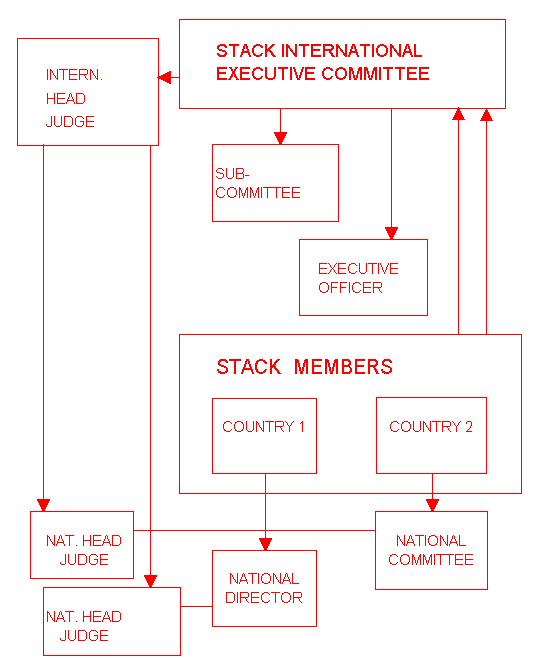
(arrows depict elections or appointments)